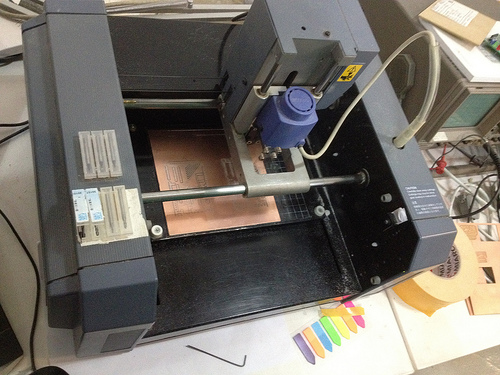
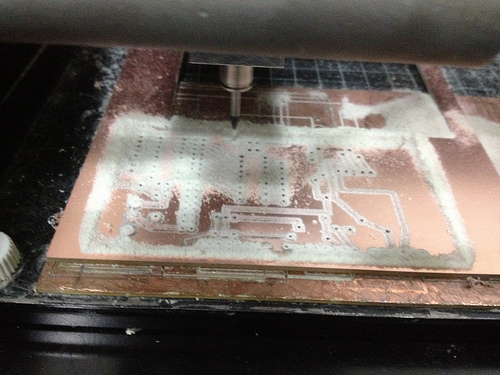
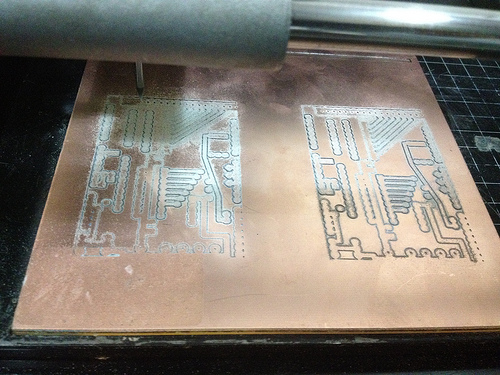
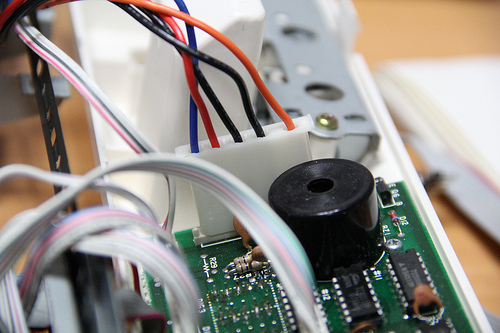
super grateful to Fablab Barcelona that let us to produce some PCBs for Knitic with their milling machine. Also kindly guided through the process. Muchas gracias!
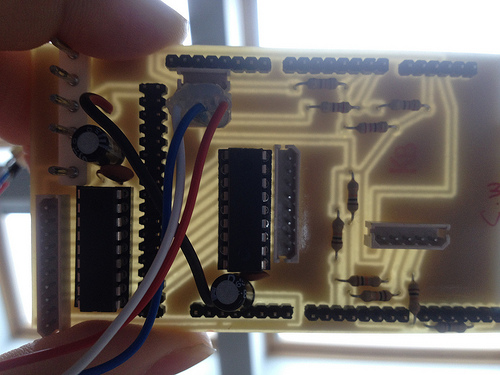
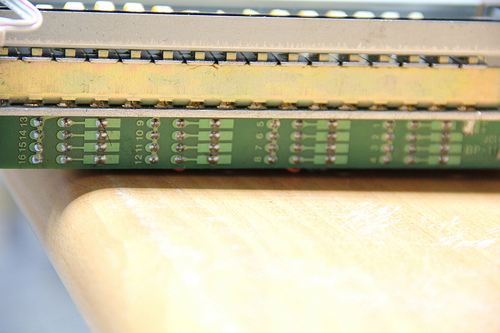
and after quick soldering we got this:
This time we made 1layer PCBs because of short time for production. But would like to try out double side circuit milling in the future. This will be quite precise work.
Some tips that we learned:
1. use KB type boards for a milling machine. Those are much softer than fiber ones and doesn’t break drills so easily. However the drawback is fragile connection pins, especially these ones that goes to Arduino.
2. mirror circuit if soldered on the back of PCB
The previous post was about making PCBs for Knitic. Why that? Because the idea is to control the knitting machine directly via Arduino and Processing.
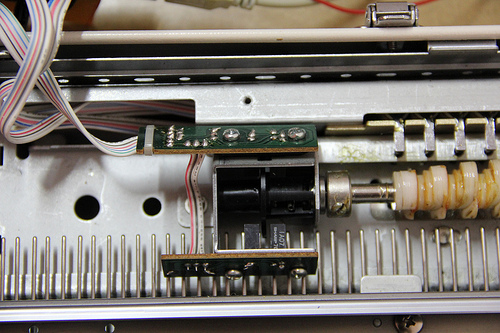
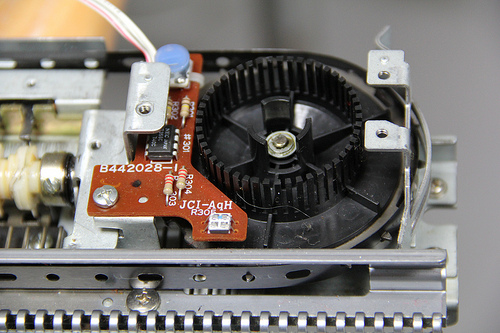
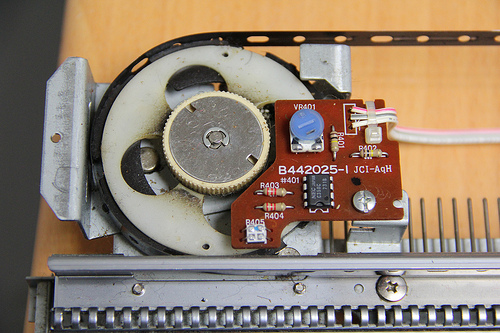
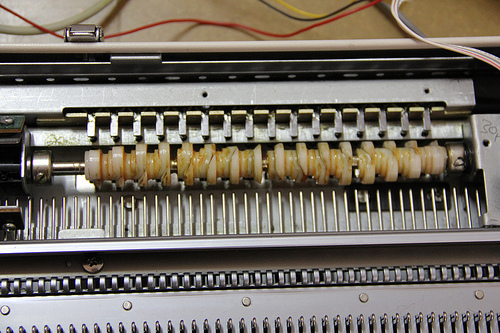
So we have opened up the machine and studies the mechanics and electronics of it. We left following useful components for us:
1. two encoders that determine position and direction of cartage. To tell more, it is not so easy task
Components:
1x IA07 SHARP 78
2x another sharp
3 resistors
2. right end-of-line sensors:
components:
chip: NEC Japan C358C 740C (low power dual operational amplifier), datasheet.
2 resistors of 2.2K
2 resistors of 5K
1 trimmer
1 hall effect sensor -> Melexis 90217
3. left end-of-line sensors:
same components as the right end-of-line sensor
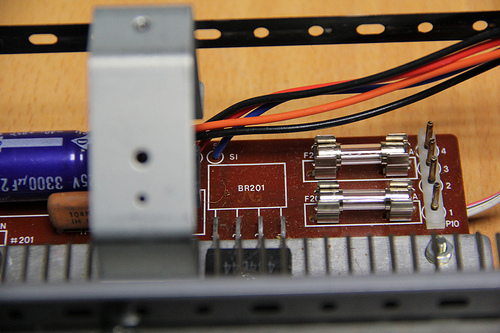
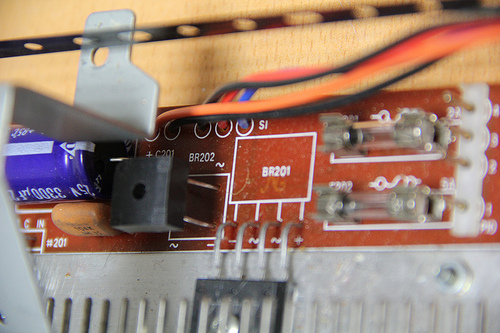
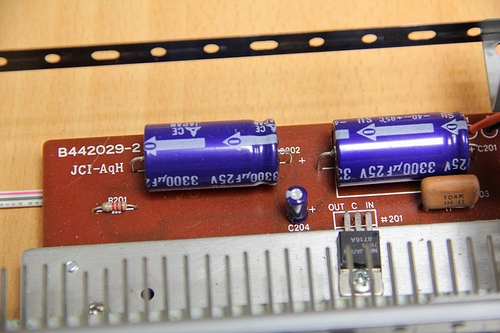
4. Circuit in the middle of knitting machine
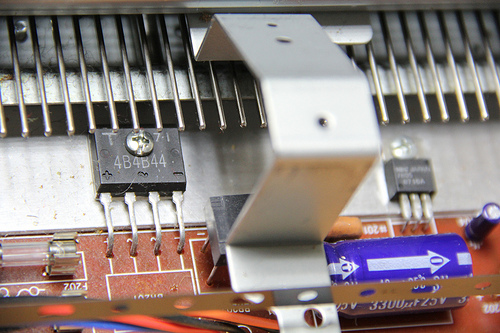
BR201 is T 7 1 4B4B44 component
2 fuses: F201 2A and F202 5A
AC to DC transformer marked as BR202 on the board
capacitor 104K IH I:
2 capacitors of 3300uF 25V
1 capacitor of 47uF 10V
1 resistor of 2.2K
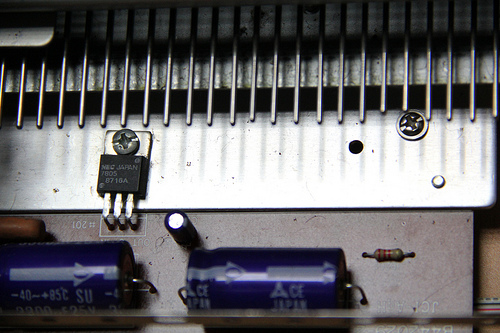
1 transistor NEC Japan 7805 8716A (voltage regulator), datasheet
IN, GND, output 5V
datasheet
5. 16 solenoids, which are pulling out needles according to the pattern:
16 solenoids of 12V
+ is interconnected; GND goes to transistor arrays (into pin-heads).
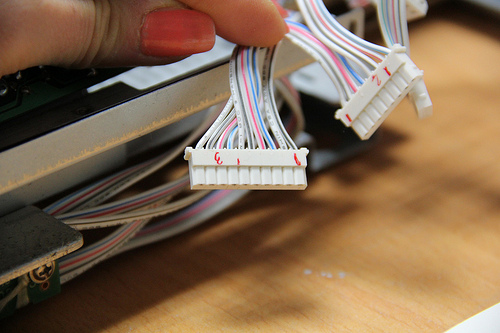
10-pin-head
|8|7|6|5|4|3|2|1|+|+|
these are solenoid numbers according to the pin connections from left to right
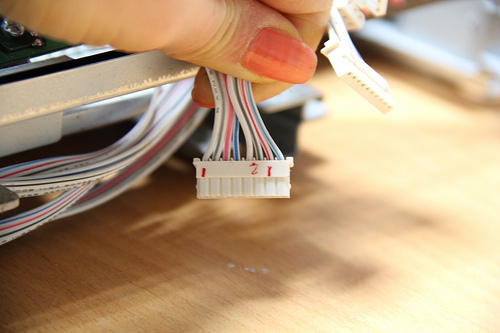
8-pin-head
|16|15|14|13|12|11|10|9|
6.POWER
|12V|5V|GND|GND|16V|
16V goes to solenoids, 5V to end-of-line sensors and encoders
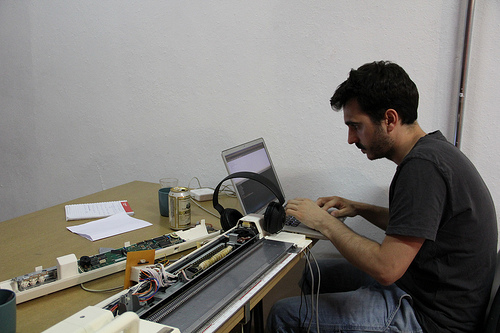
And here Mar sweating on the code of Knitic:
As you see from the photo, the original brain of knitting machine has been abandoned and we are controlling machine directly from a computer.